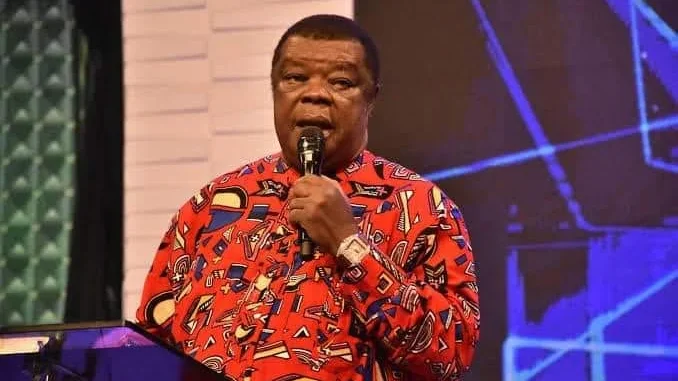
Rev. Dr. Uma Ukpai was one of Nigeria’s most respected Christian evangelists, a bridge-builder across denominations, and a humanitarian whose work blended fiery preaching with practical compassion. Born on 7 January 1945 in Asaga, Ohafia, Abia State, he passed away on 6 October 2025 at the age of 80. For more than six decades he carried the gospel across Nigeria and beyond through the Uma Ukpai Evangelistic Association (UUEA), a non-denominational ministry headquartered in Uyo, Akwa Ibom State.
This biography covers his early life, education, ministry milestones, family, the circumstances of his death, and the lasting institutions he left behind. It draws from public records, interviews, and official accounts to present a clear picture of a man shaped by hardship yet defined by resilience and service.
Early Life and Family Background
Uma Ukpai was born into an Igbo family in Asaga, Ohafia, then part of the Colony and Protectorate of Nigeria. His childhood was marked by sudden loss. His father died when Uma was only ten years old, around 1955. The young boy suddenly found himself shouldering responsibilities that most children never face. He later reflected on those years with characteristic honesty: he knew what it meant to lose a father and to become a father figure at a tender age. He learned early how to save money for school fees and developed a lasting empathy for the poor. In his own words, the stones that life threw at him became stepping stones.
An uncle took him to Ogoni so he could continue his education while helping support his mother and siblings. These early struggles forged a practical mindset. Even as a boy he showed entrepreneurial instincts, generating small income that helped the household. He was not born into a devout Christian family in the conventional sense, yet the seeds of faith were planted early.
In 1958, at the age of thirteen, Uma gave his life to Christ through the Assemblies of God Church. That personal encounter became the turning point of his life. From that moment he began a journey that would eventually take him from rural southeastern Nigeria onto national and international platforms as an evangelist.
Education and Intellectual Formation
Despite financial hardship, Uma pursued education with determination. He attended Uma Ukpai Memorial Primary School in Asaga and Khana County Council School in Ogoni. Secondary education followed at All Saints Secondary School, Aba, and the Niger Delta Technical School (now Boys Technical College), Aba.
He later travelled abroad for further studies. In the United Kingdom he attended the School of Journalism and Television in Frisham, Hermitage. In the United States he studied at South Florida Christian College in Miami, Florida; Carolina Christian University; and Burke Bible College in Kentucky. His academic credentials included a Certificate in Electrical Engineering Practice, a Diploma in Journalism, and both Bachelor’s and Doctorate degrees in Divinity.
This combination of technical, journalistic and theological training equipped him for a ministry that valued clear communication, practical problem-solving and deep biblical teaching. He was not content with spiritual language alone; he wanted results that touched education, health and economic empowerment.
The Call to Ministry and Founding of UUEA
Uma Ukpai’s formal ministry began in the 1970s. He founded the Uma Ukpai Evangelistic Association in his living room with a small group of people who gathered to pray and study the Word. From the beginning he insisted the ministry would not be a conventional church. God, he said, had called him to be a bridge among different denominations. The UUEA remained non-denominational and focused on evangelism, healing, deliverance, education and humanitarian work. Its headquarters later settled in Uyo, Akwa Ibom State, even though Uma himself remained deeply rooted in his Ohafia heritage.
His preaching style was direct, prophetic and practical. He emphasised faith that produces visible change. Large city-wide crusades became his signature. Notable among them were the Greater Ibadan for Christ Crusade in 1982 and the historic Greater Lagos for Christ Crusade in 1985. The Lagos event drew massive crowds, involved thousands of choristers and counsellors, and brought leaders from many churches together. That gathering is widely credited with helping birth the Pentecostal Fellowship of Nigeria (PFN). Uma Ukpai is recognised as one of the founding fathers of the PFN and later served in leadership roles, including as National Chairman of its Think-Tank Committee.
Other major outreaches included the annual Greater Ohafia for Christ Crusade, the Nsukka crusade in 2012, and the Anioma One-Million Man Crusade in 2016. Reports from these meetings consistently described healings, deliverances and large numbers of people committing their lives to Christ. For more than thirty years the ministry also ran medical outreaches that combined gospel proclamation with free or heavily subsidised healthcare.
Institutions of Compassion and Education
Uma Ukpai believed that preaching without practical help for the needy was incomplete. He therefore established lasting institutions:
- King of Kings Specialist Hospital in Ohafia, Abia State (established around 2000), offering 24-hour medical services including internal medicine, surgery, ophthalmology, laboratory, radiology, obstetrics and gynaecology to communities across Abia, Akwa Ibom and Cross River States.
- Uma Ukpai Eye Centre in Asaga, focused on eye care and cataract surgeries for rural populations.
- Uma Ukpai School of Theology and Biblical Studies in Uyo (founded 2008), affiliated with the University of Uyo and offering programmes in theology, ministry and Christian leadership.
- Uma Ukpai Polytechnic in Asaga-Ohafia (established 2017 and accredited by the National Board for Technical Education), providing technical and business education.
- Uma Ukpai Scholarship Foundation and the Joseph Business School (an affiliate of the Chicago-based institution), both aimed at equipping young people and believers with skills for economic independence.
In 2022 the foundation stone was laid for the Uma Ukpai Prayer City in Isiugwu-Ohafia, envisioned as a large auditorium with seating capacity for tens of thousands. These projects reflected a consistent vision: faith expressed through education, healthcare and community development.
Marriage and Family Life
In 1975 Uma Ukpai married Philomena (also referred to as Pastor or Dr. Philomena Uma Ukpai). Their meeting took place during the Nigerian Civil War period when many families had returned to their villages. Uma later recounted that God specifically indicated Philomena as his life partner at a time when he was already committed to full-time ministry and university preaching. It took additional time for her to receive the same conviction, after which they married. They remained together for nearly fifty years until his death.
Philomena became an active partner in ministry. She has served as Executive Director of the Uma Ukpai School of Theology and the Joseph Business School, co-founded the Eye Centre, and authored a book titled Ma, I Have Found A Man that shares aspects of their story. She is widely regarded as a woman of faith who stood beside her husband through both public triumphs and private pain.
The couple had eight biological children and one adopted child. Publicly known names among the surviving children include Dwight Uma (described as the third son and fifth child, who has spoken about his father’s life and serves in youth ministry) and references to a first daughter, Gaile (or Gayle) Uka. Other sons have been mentioned in family contexts, including Pastor (Dr.) Daniel-David Uma Ukpai. The family maintained a relatively private profile even as the father’s public ministry grew.
Tragedy struck the family in the mid-1980s. While travelling to a crusade, a vehicle carrying two of the children and a cousin plunged into a river near Omenuko Bridge. Uma himself dived in to attempt a rescue. His wife, who could not swim, also entered the water and was nearly lost; he managed to pull her to safety. The two children, however, could not be saved. An oncoming vehicle later smashed the car in which the bodies had been placed. The loss of two children on the same day was a profound test of faith. Uma later spoke of having received an earlier prophetic indication that he would have eight children and that two would die in a motor accident. Despite the grief, he continued preaching shortly afterwards, turning personal sorrow into a deeper identification with those who suffer.
Age, Final Years and Death
Uma Ukpai turned 80 on 7 January 2025. The milestone was marked by celebrations in Uyo and gifts from followers that reportedly totalled ₦80 million. Political and church leaders, including the Governor of Akwa Ibom State and Pastor E.A. Adeboye of the Redeemed Christian Church of God, paid tribute to his influence. Adeboye publicly recalled drawing strength from Uma’s example during his own season of personal loss.
On 6 October 2025, at the age of 80, Rev. Dr. Uma Ukpai passed away. The family announced the news several days later, describing it as a “glorious transition” and a triumphant homegoing after more than six decades of faithful service. They characterised him as a spiritual general, a founding father of faith, a loving husband, devoted father and mentor to many. Details of the funeral arrangements were released later; a major service of songs and interment took place in Asaga, Ohafia, in March 2026, attended by church leaders, political figures and large numbers of mourners. The Assemblies of God Nigeria played a prominent role in the burial rites, reflecting his early roots in that denomination.
Net Worth
Reliable public information about Uma Ukpai’s personal net worth is not available. Unlike some high-profile pastors whose assets are regularly estimated by media houses, no verified figure from Forbes or equivalent sources exists. Low-quality websites have floated numbers ranging from a few hundred thousand to several million dollars, but these remain unverified and should be treated with caution. What is clear is that the resources of the ministry were channelled into hospitals, schools, scholarships, medical outreaches and community infrastructure rather than personal display. His lifestyle and public statements consistently emphasised stewardship and service over accumulation.
Legacy and Continuing Impact
Uma Ukpai’s influence rests on several pillars. First, he helped unify Pentecostal and evangelical voices in Nigeria at a critical period through the formation and support of the PFN. Second, he modelled a ministry that refused to separate spiritual proclamation from social action. The hospitals, polytechnic, theology school and scholarship programmes continue to serve thousands. Third, his personal story of early poverty, the loss of children, and unbroken commitment offered a powerful testimony of resilience.
He mentored numerous younger ministers and maintained relationships across denominational lines. His insistence that the UUEA was not a competing church but a bridge remains a distinctive contribution to Nigerian Christianity. Annual crusades, medical missions and educational institutions keep his vision alive under the continuing leadership of family members and ministry associates, including his wife Philomena and sons such as Dwight and Daniel-David.
In an age when many measure success by buildings, crowds or online metrics, Uma Ukpai’s life points back to quieter virtues: faithfulness over decades, compassion born of personal suffering, and a determination to leave institutions that outlast any single individual. From a fatherless boy in Ohafia who paid his own school fees to an international evangelist whose crusades helped shape a national fellowship, his journey illustrates how ordinary beginnings, surrendered to a clear calling, can produce lasting fruit.
The Uma Ukpai Evangelistic Association, the hospitals that still treat the sick, the schools that still train leaders, and the countless personal testimonies of people whose lives were changed in his meetings form the practical legacy of a man who finished his race at eighty. His story continues to speak to those who face loss, poverty or the challenge of uniting divided communities under a higher purpose.

Henry Jude writes about biotechnology and housing technology, focusing on the latest trends. He has 15 years of experience reporting on and analyzing advances in these fields. Holding both a BSc and an MSc in Biotechnology, he uses his scientific training to explain complex ideas clearly and show how new technologies can be applied in real life.