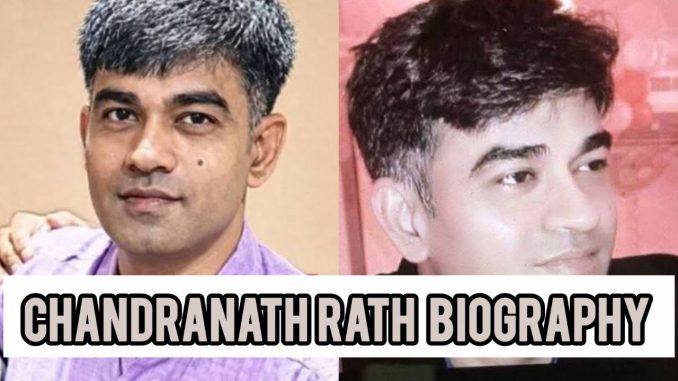
Chandranath Rath Biography
Chandranath Rath was born on July 17, 1984, in Purba Medinipur, West Bengal, India. He was an Indian Air Force veteran and close political aide of BJP leader Suvendu Adhikari. He served nearly 20 years in the Indian Air Force before transitioning to political work, eventually becoming one of the most trusted members of Adhikari’s political team. Chandranath Rath was 41 years old as of 2026.
In his formative years, Rath studied at Rahara Ramakrishna Mission, an institution known for its emphasis on discipline, spiritual values, and a rigorous approach to character formation. That education left a visible mark on him. Family acquaintances recalled that he had at one point seriously considered a spiritual life, drawn by the ideals of service and renunciation that the Ramakrishna tradition promotes. That chapter did not come to pass, but those who knew him well noted that the qualities the institution instilled — quietness of character, discipline, and a preference for working behind the scenes — stayed with him through every phase of his later life, whether in uniform or in politics.
Rath was, by all accounts, a man who preferred to let his work speak rather than his words. Those who interacted with him professionally described him as soft-spoken and largely absent from the kind of public attention that political work often generates. He was 41 years old at the time of his death, and despite the sensitivity of the role he had come to occupy in Suvendu Adhikari’s political machinery, he remained a figure known primarily to insiders rather than to the broader public.
Chandranath Rath Career
After completing his schooling at Rahara Ramakrishna Mission, Chandranath Rath made a choice that set the next two decades of his life: he joined the Indian Air Force. He served for close to 20 years, a career of considerable length that speaks to both his commitment and his capability within the institution. The discipline and operational precision that characterise Air Force service became foundational to everything he did afterwards. When he eventually opted for voluntary retirement, he carried those qualities with him into civilian life.
After leaving the armed forces, Rath spent a period working in the corporate sector, building a brief but meaningful experience of life outside both the military and politics. That transition, however, was not his final destination. His connections to the Purba Medinipur political world — reinforced by his family’s own history within it — drew him gradually toward political coordination and organisational management.
His family’s political roots ran through the All India Trinamool Congress. His mother, Hasi Rath, had reportedly held a post in a local panchayat body during the TMC’s early years of expansion in Purba Medinipur. The connection between the Rath family and Suvendu Adhikari himself was said to go back more than two decades, long before either the family or Adhikari made the decision to shift allegiance to the BJP in 2020. Rath formally joined Adhikari’s official team around 2019, when the leader was still serving as a minister in the Mamata Banerjee government. He initially handled administrative responsibilities tied to Adhikari’s ministerial office and continued in a similar operational role after the political switch.
Over the years that followed, Rath grew into one of the most indispensable figures in Adhikari’s political machinery. He coordinated organisational work, managed logistics, and maintained the critical lines of communication between Adhikari and the network of party workers and legislators that any senior BJP leader in West Bengal depends upon. BJP insiders described him as someone who had earned Adhikari’s complete trust — a designation that in political life is both a privilege and a responsibility.
He was regularly assigned sensitive political and campaign-related tasks, including involvement in high-profile efforts such as the BJP’s Bhabanipur campaign. Within certain sections of the party, there had even been quiet speculation that Rath might be given a larger formal administrative role if Adhikari’s own position advanced significantly after the 2026 assembly elections. That possibility was closed permanently on the night of his killing.
Chandranath Rath Personal Life
Chandranath Rath came from a family with deep roots in the political culture of Purba Medinipur. His mother, Hasi Rath, was a woman of some local standing within TMC structures during the party’s early years in the region. The family’s long association with Suvendu Adhikari predates the formal political relationship between Rath and the BJP leader, reflecting the kind of personal loyalty and community connection that often runs beneath the surface of formal party politics in Bengal.
Rath was residing in an upscale residential complex in Dohari, Madhyamgram, at the time of his death — a location that placed him closer to the political operational centre of Adhikari’s activities in North 24 Parganas. Despite his growing importance in the party’s organisational life, he retained the reserved, private character that those who knew him consistently noted. He was not a man who sought visibility. His family and close associates emphasised that his commitment to service — first to his country in the Air Force, then to his leader in politics — defined him more than any public profile ever did.
Chandranath Rath Death
On the night of Wednesday, May 7, 2026 — barely 48 hours after the declaration of results in the West Bengal assembly elections — Chandranath Rath was returning to his Madhyamgram residence with his aide Buddhadeb Bera. Their journey was intercepted near Doharia at approximately 10.30 pm in what investigators and eyewitnesses quickly identified as a carefully pre-planned ambush. Motorcycle-borne assailants, working in coordination with a car bearing a fake number plate, blocked Rath’s Scorpio SUV on a deserted stretch of Jessore Road — barely three kilometres from Kolkata airport. The attackers had reportedly been waiting at the location for forty minutes before Rath’s vehicle arrived.
“The victim was brought dead with two bullet injuries on his chest, which pierced his heart, while another bullet struck his abdominal area. There was no opportunity to resuscitate him.” — Treating doctor, PTI
Multiple rounds were fired at point-blank range. A witness who was present described the shooter as clearly professional — someone who opened fire, fired two or more rounds into the left side of the vehicle, and fled immediately on a motorcycle. The Scorpio bore a sticker identifying it as associated with the West Bengal Legislative Assembly, which investigators believe the attackers used to identify the vehicle without difficulty. Rath was hit by bullets in the chest — two of which pierced his heart — and one in the abdominal area. He was declared brought dead at a nearby private hospital. Buddhadeb Bera, who was driving the vehicle, sustained serious injuries and was hospitalised.
Police recovered empty cartridges, live rounds, and a suspicious vehicle — whose number plate was found to be fake and whose chassis number appeared tampered with — from the crime scene. Investigators noted that the firearms used were consistent with Glock 47X pistols, a sophisticated weapon not typically associated with ordinary criminal activity, leading senior West Bengal Police officials to examine whether professional shooters had been deployed. Four motorcycles, reportedly without number plates, were used by the attackers to carry out the operation and escape.
Suvendu Adhikari described the killing as a “cold-blooded and pre-planned murder,” alleging that the assailants had conducted reconnaissance in the days before the attack. The killing, coming immediately after the BJP’s landslide victory in the West Bengal assembly elections — in which the party won 207 of 294 seats — triggered widespread political outrage. BJP leaders blamed the Trinamool Congress, while the TMC condemned the incident. Additional police forces were deployed across Madhyamgram and surrounding areas as protests erupted and investigators worked to trace the perpetrators through CCTV footage, multiple raid operations, and forensic analysis of the recovered evidence.
Conclusion
Chandranath Rath was not a man who sought headlines. The headline he received was not one anyone who knew him would have wished for. His death, carried out with the precision and planning of a professional operation barely two days after a historic election result, has become part of the larger and deeply troubling story of political violence in West Bengal. The investigation continues, and the question of who ordered and carried out his killing remains open — a question that matters not just for justice, but for what the answer will reveal about the state of politics in the state he served.
FAQs
How was Chandranath Rath killed?
Chandranath Rath was shot dead on the night of May 7, 2026, when motorcycle-borne assailants intercepted his Scorpio SUV near Doharia, Madhyamgram, about three kilometres from Kolkata airport. A vehicle with a fake number plate blocked his car, after which shooters fired multiple rounds at close range. Rath sustained two bullet injuries to the chest that pierced his heart, and one to the abdomen. He was declared brought dead at a nearby private hospital.
What was Chandranath Rath’s role with Suvendu Adhikari?
Chandranath Rath served as the personal assistant and a key backroom political operator for BJP leader and West Bengal opposition leader Suvendu Adhikari. He joined Adhikari’s team around 2019, initially managing administrative responsibilities for Adhikari’s ministerial office. Over the years, he grew into a central figure in Adhikari’s political machinery, handling logistics, organisational coordination, communication with party workers and legislators, and sensitive campaign-related responsibilities.
Did Chandranath Rath serve in the Indian Air Force?
Yes. Chandranath Rath served in the Indian Air Force for close to 20 years before taking voluntary retirement. His military background in discipline and operational precision became central to his effectiveness in political coordination work. After leaving the Air Force, he briefly worked in the corporate sector before gradually transitioning into political and organisational management under Suvendu Adhikari.
What was the political context of Chandranath Rath’s killing?
Chandranath Rath was killed barely 48 hours after the declaration of the 2026 West Bengal assembly election results, in which the BJP won a landslide victory of 207 out of 294 seats. His killing was widely described as part of a wave of post-poll violence that has historically followed elections in West Bengal. BJP leaders blamed the Trinamool Congress, while TMC condemned the incident. West Bengal Police deployed additional forces in the area and launched an investigation involving CCTV analysis and multiple raids.
Originally posted 2026-05-07 09:10:38.

Henry Jude writes about biotechnology and housing technology, focusing on the latest trends. He has 15 years of experience reporting on and analyzing advances in these fields. Holding both a BSc and an MSc in Biotechnology, he uses his scientific training to explain complex ideas clearly and show how new technologies can be applied in real life.