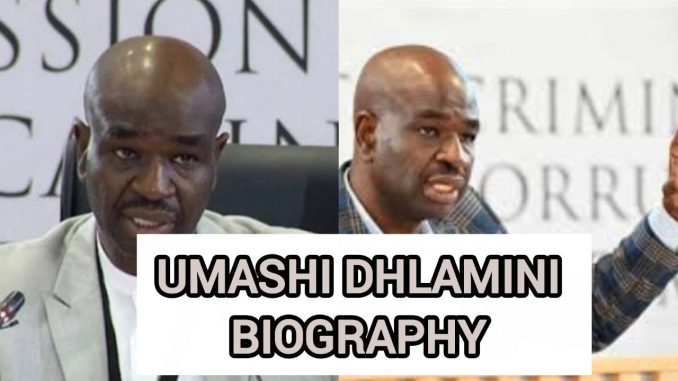
Umashi Dhlamini Biography
Umashi Dhlamini was born on March 19, 1984, in Soshanguve, a township located in the Gauteng province of South Africa. Soshanguve is a densely populated residential area situated north of Pretoria (Tshwane), and it is the community that shaped much of Dhlamini’s early life and identity. Growing up in that environment, Dhlamini was exposed to the political and civic currents that defined post-apartheid South Africa, and from a relatively young age he was involved in student activism, an experience that would later surface during his testimony at a major judicial commission of inquiry. Umashi Dhlamini is 42 years old as of 2026.
His family background is rooted in the taxi industry, a sector that has long played an important economic role in South African townships. The surname Dhlamini is commonly associated with Zulu and broader Nguni ethnic heritage, placing him within the larger cultural fabric of Black South African communities. Though no verified public records confirm the specifics of his academic qualifications, his senior financial and administrative role in a metropolitan police department strongly suggests formal training in public administration, law enforcement management, or a related discipline.
By the time he reached adulthood, Dhlamini had transitioned from student activism into the structured world of South African law enforcement. He built his career inside the Tshwane Metropolitan Police Department (TMPD), a municipal police service responsible for law enforcement within the City of Tshwane. Details about his personal life, including his marital status and family, remain largely out of the public domain, though during testimony he referenced giving marital advice to colleagues, indicating a degree of familiarity with family life.
Umashi Dhlamini Career
Umashi Dhlamini rose through the ranks of the Tshwane Metropolitan Police Department to reach one of its most senior positions. He served as Deputy Chief and Deputy Commissioner of the TMPD, a role that placed him at the heart of the department’s financial oversight, administrative operations, and procurement processes. His responsibilities included budget management, divisional support, and the approval of payments tied to city contracts, making him one of the most operationally powerful figures within the metro police structure.
For many years, Dhlamini was a relatively low-profile figure in public discourse. His work was largely internal and administrative. However, his career became significantly more prominent as investigations into procurement irregularities at the City of Tshwane began to intensify. His role positioned him as a central figure in how contracts were managed, evaluated, and awarded, which eventually drew him into the orbit of one of South Africa’s most high-profile municipal investigations.
Throughout his career, Dhlamini maintained close relationships with various officials both inside and outside of the TMPD. One of the most significant of these was his relationship with suspended South African Police Service (SAPS) Gauteng Organised Crime Unit officer Sergeant Fannie Nkosi, whom Dhlamini described as someone he had personally mentored and groomed. This mentorship would later become a focal point in the allegations levelled against him at the Madlanga Judicial Commission of Inquiry.
Dhlamini’s career has also been marked by multiple investigations dating as far back as 2015 to 2018, when he was reportedly investigated for maladministration and misconduct. These earlier probes did not result in the kind of sustained public scrutiny that would follow in 2026, but they formed part of a broader pattern that investigators and commission members would eventually point to when examining his conduct.
Umashi Dhlamini Controversies – Madlanga Commission
The most defining controversy of Umashi Dhlamini’s career centres on his role in a R2.9 billion security contract awarded by the City of Tshwane. This massive contract, which was divided among a select list of companies, became the subject of intense scrutiny at the Madlanga Judicial Commission of Inquiry — a commission chaired by retired Constitutional Court Justice Mbuyiseli Madlanga. Dhlamini was accused of rigging the tender evaluation process and colluding with Sergeant Fannie Nkosi and then-City of Tshwane Chief Financial Officer (CFO) Gareth Mnisi to direct contracts toward preferred companies.
WhatsApp messages placed before the commission painted a damaging picture. In one exchange, Dhlamini texted Nkosi about the CFO: “I can see ukuthi you have captured mfowethu and he wouldn’t want you to leave him. You should gear yourself to do so forever my brother. Umfowethu is the best person to be with. uJuda wethu who will do great things for us compared to uBaba wakho ongasekho.” Evidence leader Matthew Chaskalson put it to Dhlamini directly, stating that the capture of the CFO was a designed process to put him in a position to deliver favours. Dhlamini rejected this interpretation, insisting the texts were friendly banter taken out of context.
“This is not about closeness, this is about Tshwane business and the sort of thing you should enquire about directly from another Tshwane employee. What you are saying does not make sense at all.” — Justice Mbuyiseli Madlanga
Dhlamini also testified about two former student activist acquaintances, referred to only as Muzi and Sipho, who came to his office claiming to represent the Economic Freedom Fighters (EFF) and to be working with EFF leader Julius Malema. According to Dhlamini, they brought a list of companies they wanted favourably considered for the security tender. He said he did not believe they genuinely represented the EFF and instead knew them as longstanding ANC members from Soshanguve who were name-dropping powerful figures to gain influence. He forwarded the list to Nkosi so that it could be compared with a list that Mnisi allegedly already had.
Justice Madlanga challenged Dhlamini on why he had not simply called the CFO directly to verify the claims. Dhlamini’s response — that he had no direct relationship with Mnisi and therefore relied on Nkosi as an intermediary — failed to satisfy the commission. The judge described the explanation as illogical, pointing out that this was official city business that warranted a direct official inquiry. Dhlamini was also questioned about sharing a draft bid evaluation committee document with Nkosi, which he defended by arguing the information was already public at that point.
By 2026, Dhlamini had been suspended from his position as Deputy Chief of the TMPD amid the mounting allegations surfacing at the commission. He claimed he had voluntarily stepped aside during the investigation. In addition to the tender irregularities, he was also questioned about approving payments without proper procurement procedures, including invoices that had been issued without corresponding purchase orders. His suspension and continued testimony at the commission made him one of the most talked-about figures in South African municipal accountability discussions during this period.
Despite the weight of the evidence, Dhlamini consistently denied wrongdoing throughout his appearances at the Madlanga Commission. He maintained that he was not interested in politics, had deliberately avoided engagement with politicians for personal reasons rooted in his activist history, and that his actions were mischaracterised. His testimony, however, raised serious questions about the governance culture within the Tshwane Metropolitan Police Department and the City of Tshwane at large.
Conclusion
Umashi Dhlamini wielded considerable influence over the city’s procurement and financial administration. The allegations that emerged at the Madlanga Judicial Commission — involving a R2.9 billion security contract, WhatsApp evidence of behind-the-scenes dealings, and questions about his role in capturing a key financial official — have cast a long shadow over his legacy. Whether the commission ultimately finds him culpable or not, his name has become closely linked to the broader national conversation about corruption, tender fraud, and accountability in South African public institutions.
FAQs
Who is Umashi Dhlamini?
Umashi Dhlamini is a senior South African law enforcement official who served as Deputy Chief and Deputy Commissioner of the Tshwane Metropolitan Police Department (TMPD). He was born on March 19, 1984, in Soshanguve, Gauteng, and became widely known due to his testimony and suspension in connection with a R2.9 billion security contract investigation at the Madlanga Judicial Commission of Inquiry in 2026.
What is the Madlanga Commission and why is Dhlamini involved?
The Madlanga Judicial Commission of Inquiry is a commission chaired by retired Constitutional Court Justice Mbuyiseli Madlanga, set up to investigate procurement irregularities and corruption within the City of Tshwane. Dhlamini is involved because he was accused of colluding with SAPS officer Sergeant Fannie Nkosi and city CFO Gareth Mnisi to rig a R2.9 billion security contract in favour of selected companies.
What did the WhatsApp messages presented at the commission reveal?
WhatsApp messages shown at the commission depicted Dhlamini facilitating communications between Sergeant Nkosi and CFO Gareth Mnisi, passing documents related to security contracts. In one notable message, Dhlamini appeared to celebrate Nkosi “capturing” the CFO, suggesting the CFO had been brought under their influence. Dhlamini denied the messages had the meaning the commission attributed to them.
Was Umashi Dhlamini suspended from the Tshwane Metro Police Department?
Yes. By 2026, Umashi Dhlamini had been suspended from his position as Deputy Chief of the Tshwane Metropolitan Police Department amid the allegations that emerged at the Madlanga Commission. He stated that he voluntarily stepped aside during the investigation, though the suspension was tied to the broader corruption and tender irregularity allegations being examined by the commission.
Did Dhlamini deny the allegations of tender rigging and corruption?
Yes. Throughout his testimony at the Madlanga Commission, Umashi Dhlamini consistently denied all allegations of tender rigging, collusion, and corruption. He argued that WhatsApp messages were taken out of context, that he acted as a communication intermediary rather than a manipulator, and that he had no personal interest in influencing the outcome of the R2.9 billion security contract. Justice Madlanga publicly challenged the credibility of several of his explanations during hearings.
Originally posted 2026-05-01 10:09:09.

Henry Jude writes about biotechnology and housing technology, focusing on the latest trends. He has 15 years of experience reporting on and analyzing advances in these fields. Holding both a BSc and an MSc in Biotechnology, he uses his scientific training to explain complex ideas clearly and show how new technologies can be applied in real life.